
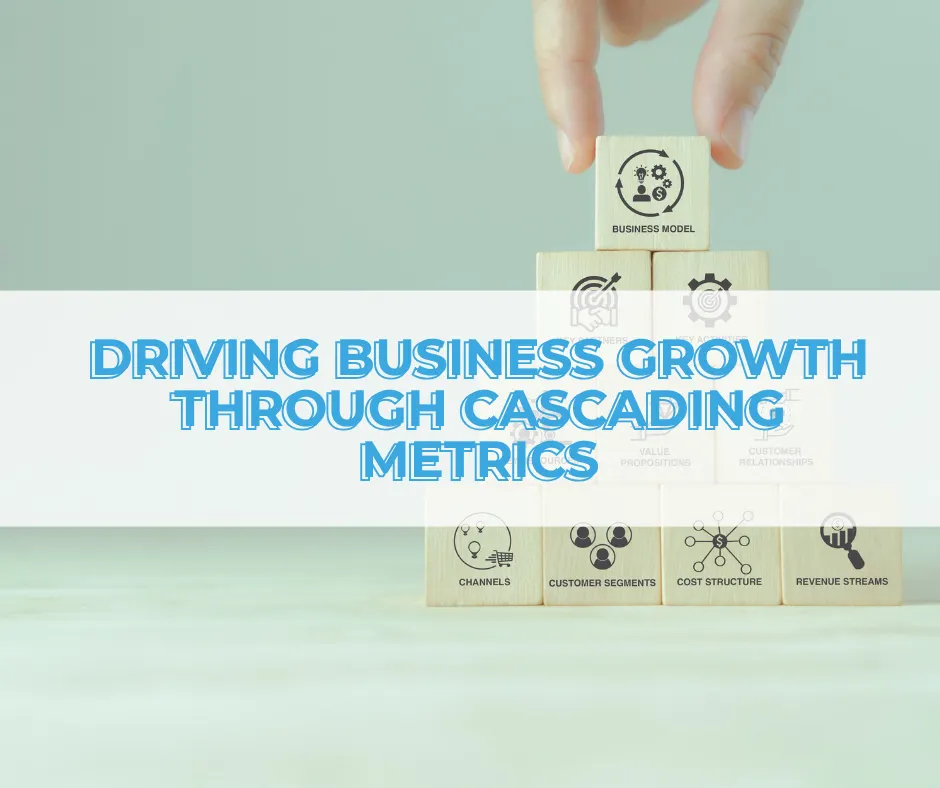
In today’s competitive business environment, scalability is a crucial factor for success. A valuation-first strategy not only focuses on increasing your business’s value but also leverages cascading metrics to drive scalability. This approach ensures that every department and team within your organization is aligned towards common goals, contributing to overall value creation.
The Power of Cascading Metrics
Cascading metrics provide a structured framework that aligns your organization from top to bottom. By breaking down high-level goals into actionable metrics at every level, you create a clear line of sight from individual actions to overall company value.
How Cascading Metrics Work
- Top-Level Metrics: Begin with high-level valuation-driving metrics that reflect the company’s overall health and long-term value. These metrics serve as the foundation for your strategy.
- Departmental Metrics: Break down top-level metrics into specific, actionable goals for each department. For instance, if customer retention is a top-level metric, the sales department might focus on customer satisfaction scores, while the product development team works on feature enhancements.
- Individual Metrics: Translate departmental goals into individual performance metrics. This ensures that each team member understands how their daily tasks contribute to the company’s overarching valuation goals.
Benefits of Cascading Metrics
- Alignment: Ensures that every part of your organization is working towards the same strategic objectives.
- Scalability: Facilitates growth by aligning individual and departmental efforts with company-wide goals.
- Clarity: Provides a clear understanding of how individual contributions impact the overall value of the business.
Ready to elevate your business strategy? Contact Tomas to learn more about implementing your valuation-first approach. Reach out to him at tomas@54.227.176.170.
Finally, make sure you try Catipult.AI. It’s only $1 for 30 days… start your trial today.